Showing posts with label cooking. Show all posts

Thursday, November 11, 2010

Few Things To Do With Pizzas

When we talk about Pizza and learning all that comes to mind is fractions. No doubt pizza comes in really handy when teaching fractions but there is so much more you can do with this all time family favorite. So here are just a few ideas.


2010-11-11_1354

1. Use pizzas as creative writing starter.


2010-11-11_1357

2. Use your local pizza shops to introduce components of spatial organization with this interesting lesson plan.


2010-11-11_1417

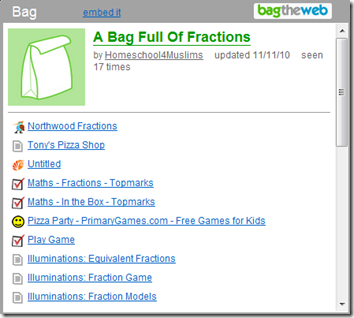
3. Fractions, of course, may be using one of the pizza game from this Bag Full Of Fractions?


2010-11-11_1441

4. Research about the history of pizza and make a flip book or timeline to show your results.


2010-11-11_1447

5. Do some science by looking at the ingredients in pizza base. Learn about wheat, explore gluten and yeast and do some experiments using yeast.


2010-11-11_1504

6. Explore your toppings like meat and cheese, dig deeper into how sausages are made and the biology behind cheese. You can also try making cheese at home and compare it with the store bought version.


2010-11-11_1507

7. Talking about pizza, which country comes to mind? Italy! So why not research about Italy and make a fact file?


2010-11-11_1511

8. Practice persuasive writing by making a poster for your very own pizzeria.


2010-11-11_1516

9. Now that you have enough (or more than?) knowledge about pizzas, why not present it with a digital poster?


2010-11-11_1527

10. And don’t forget to make your own home made pizza or perhaps you will like a Chicago style deep dish stuffed pizza ?

Tuesday, November 3, 2009

Yeast-Bread Activities

Continuing on the activities from The Grain Chain, here are some more yeast activities.
Bread baking:
(country loaf bread rolls recipe from The Grain Chain)
IMG_1699
IMG_1700
IMG_1705
IMG_1708
IMG_1716  
Children can learn about measuring:
Start with measurements. Show the kids how to measure 1 cup of flour and put it into a bowl. Then have them measure 1 cup of flour again using ½ cup measurements, 1/3 cup measurements and ¼ cup measurements. Talk about the difference in the measuring cups. How are they different? How do you know that four ¼ cups equals 1 cup? Ask them to show you.
Halving/doubling:
Another way to teach math through cooking is to double the bread recipe. Ask the children how you can make enough for 12 people if your recipe only makes enough for 6. For younger children who are not yet ready to multiply, introduce the concept of doubling and then cutting in half. You can prompt them to think about making two recipes, counting and measuring the ingredients twice. Should you make two separate recipes or just combine it all into one bowl? All of these prompts will help them think about doubling. Ask older children to multiply the recipe measurements by two. Have the children think about this question – if you need to double the ingredients, do you need to double the cooking temperature? Why or why not? Have them write a constructed response to that question. Children who are too young to write can give verbal answers.
Younger ones can keep record of time and perhaps use a timer. you can also ask questions such as how many more minutes to go? etc

From Wheat to Bread presentation:
(presentation not made by me, i downloaded it from one of the teacher’s community website, but can’t find the link again. If anyone knows the owner website, pls let me know so i can give proper credits)

Yeast Activities:
Yeast can be a great learning tool. It explains about living things, how they need food/warmth. For younger children try this activity.
blog-he


Older ones can perhaps do this one
blog-he


Happy Baking/Experimenting/Funning!

Wednesday, October 21, 2009

Wednesday Weekly Website – The Grain Chain

The Grain Chain

Review: A fun and interesting way to find out how grains are grown blog-heand harvested, what happens to them before they reach your plate, and why they're so good for you! Investigate healthy eating and meal planning, or go behind the scenes of the flour, grain and baking industry. With different sections appropriate for different ages, this website gives a very good and thorough understanding of the journey of a loaf!
blog-he
Suitable for ages: 5-16  (within website you will find different areas suitable for different ages)
blog-he
Related Posts with Thumbnails